Loading...
Serving Fullerton, CA and surrounding areas. (657) 354-1477
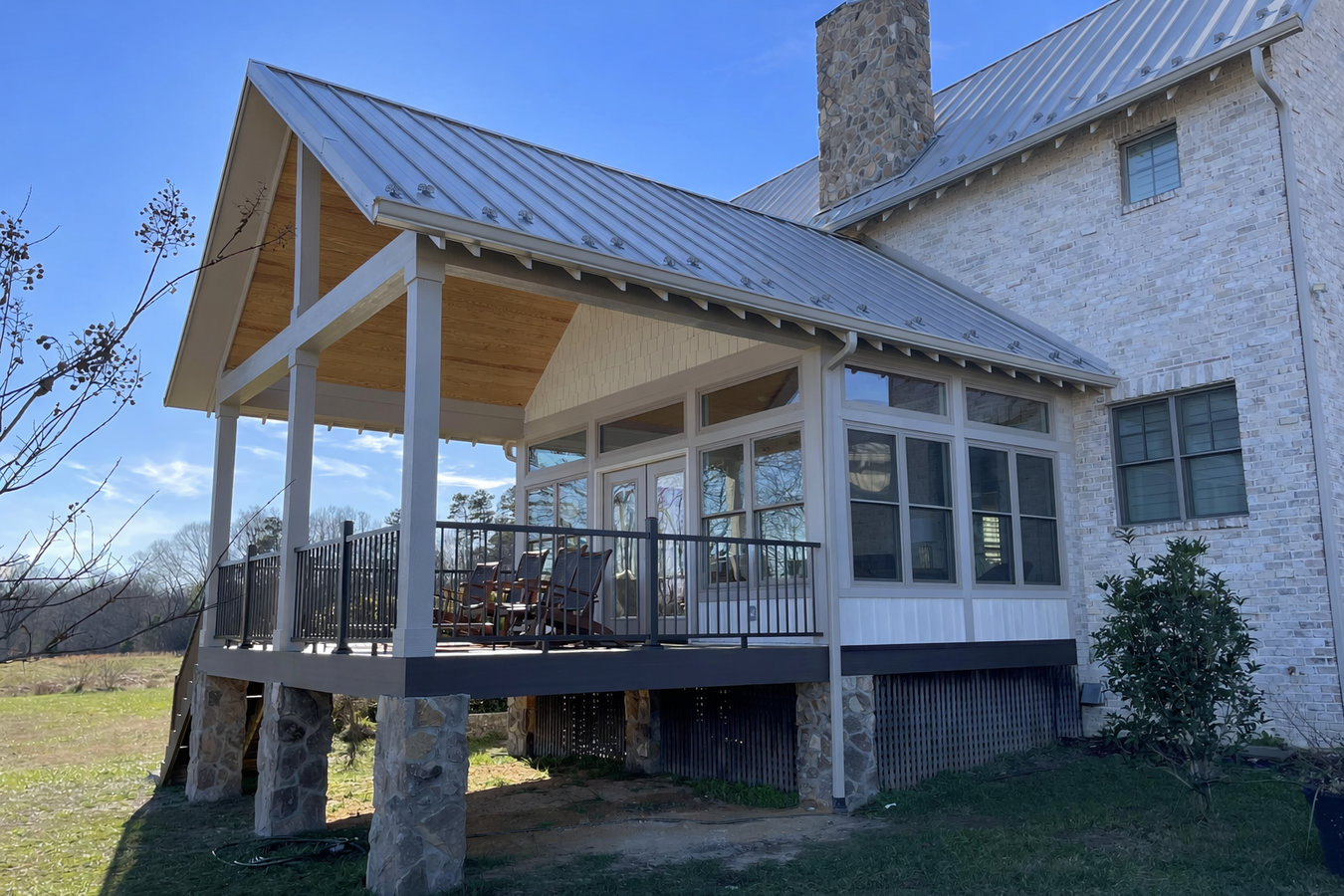
Custom Fullerton Sunrooms builds patio-to-sunroom conversions, enclosed patio rooms, and custom sunroom additions for Santa Ana homeowners in Floral Park, DTSA, and throughout this dense, historically rich city. We work on Craftsman bungalows, Spanish Colonial Revival properties, and postwar tract homes - and we reply to all inquiries within one business day.
Santa Ana lots are some of the smaller in Orange County - many measure 4,000 to 6,000 square feet - so adding a full structural room addition is not always practical. A patio-to-sunroom conversion makes the most of what is already there: the existing concrete slab becomes the floor, walls and glazing are built up from the slab perimeter, and the result is a real enclosed room without reducing the rear yard to nothing. For Santa Ana homeowners who have a covered or uncovered patio they are not using in summer heat or winter rain, converting it into a proper room is one of the highest-return changes available on a small-lot property.
Many Santa Ana homes - particularly in the older neighborhoods near downtown - have existing covered patio structures with wood or aluminum framing that has been in place for 30 to 50 years. Enclosing that structure with insulated panels and weathertight glazing converts an open-air covered area into a protected room that can be used in every season. For homeowners in Floral Park or near the Bowers Museum whose properties have mature landscaping and limited rear yard space, an enclosed patio room adds interior square footage without disturbing the yard.
Santa Ana home values have climbed sharply over the past decade, and long-term owner-occupants who have lived in their homes for 20 or more years have real equity to protect and build on. A permitted sunroom addition increases functional square footage in a way an appraiser can document, which matters when refinancing or eventually selling. For the roughly 40% of Santa Ana homeowners who own rather than rent, a well-built addition is an investment in a property they intend to keep - not just a cosmetic upgrade.
Santa Ana's historic districts - Floral Park, Washington Square, and the blocks near downtown - have homes with architectural details that a standard kit sunroom cannot match cleanly. Spanish Colonial Revival and Craftsman homes have rooflines, exterior cladding, and window proportions that a custom-designed room can complement rather than clash with. A custom sunroom for a historic Santa Ana home is designed to attach properly to the existing structure and match the character of the house, not just be placed against it.
Santa Ana's winters are mild - freezing temperatures are rare and the coldest months stay comfortably above 40 degrees Fahrenheit. That means a three season sunroom - designed for spring, fall, and mild winter use without full HVAC integration - is a practical and cost-effective option for many Santa Ana homeowners who want to extend their living space without the cost of a fully conditioned four season build. A three season room still uses proper weathertight glazing and framing to handle rain and wind, but does not require the insulation and mechanical systems that a year-round room demands.
Santa Ana has a large share of multi-family properties mixed into its residential blocks, and many of these buildings have older screened or aluminum patio enclosures that have not been updated in decades. Whether a property is owner-occupied or a rental that a landlord wants to improve, remodeling an existing enclosure - replacing failed panels, resealing the roof joints, and upgrading insulation - is typically faster and less disruptive than a full teardown and rebuild. Santa Ana's dense neighborhoods mean minimal disruption to neighbors is a real consideration, and a targeted remodel keeps on-site work time shorter than new construction.
Santa Ana is one of the most densely populated cities in the United States, with roughly 310,000 people in 27 square miles. Lots are small, homes are close together, and the housing stock is old - a large share of the city's homes were built between the 1920s and 1960s. That combination creates conditions that a contractor who only works in newer suburban cities will not immediately recognize. Stucco exteriors on 80-year-old homes crack differently than modern stucco applications. Wood-framed walls from the 1930s may have deflection or moisture damage that does not show until you are framing against them. Concrete patio slabs from the 1950s have been through 70-plus wet-dry cycles of clay soil expansion and contraction, and many of them have shifted or cracked in ways that affect what they can support. Skipping the condition assessment and going straight to framing is how a patio conversion project turns into a structural problem.
Santa Ana's climate is demanding in ways that matter for sunroom performance. Summers are long, dry, and hot - temperatures can exceed 100 degrees Fahrenheit during heat events, and the UV exposure through the summer months breaks down exterior caulk, stucco sealants, and glazing gaskets faster than most homeowners expect. Santa Ana wind events in fall and winter bring gusts of 50 mph or more that test the weathertightness of any enclosure. According to the California Geological Survey, expansive clay soils - which are prevalent throughout Orange County and directly under much of Santa Ana - cause documented slab and foundation movement that affects residential properties throughout the area. A sunroom contractor working here regularly knows to account for all of this before a project begins.
Our crew works throughout Santa Ana regularly, and we understand the local conditions that affect sunroom contractor work here. We submit permit applications to the City of Santa Ana Building Division and are familiar with the plan check process for residential room additions and patio enclosures in this city. The city's plan check for straightforward residential additions typically takes two to three weeks, and our plans are prepared to current California Building Code standards to avoid revisions that add time to the schedule.
Working in Santa Ana's dense residential blocks requires planning that is different from lower-density suburbs. Many streets near DTSA and the older neighborhoods off North Main Street have tight vehicle access, limited curb space for staging materials, and homes that share a wall or sit very close to property lines. We map out material delivery and equipment access before work begins so we are not working around problems we should have anticipated. The 5, 55, and 22 freeways that run through and near Santa Ana also give us direct access from our Fullerton base, which keeps response times and scheduling lead times reasonable across the city.
We serve several communities adjacent to Santa Ana that have comparable older housing stocks. Our team regularly works in Garden Grove to the west, which shares Santa Ana's postwar housing density and permit processes, and in Orange to the north, where older home styles and clay soil conditions are similar.
Call us at (657) 354-1477 or submit an estimate request through the contact form. We reply to all Santa Ana inquiries within one business day - no long hold times, no automated scheduling systems.
We visit your Santa Ana property to assess the slab, the attachment wall, and any existing structure we would be working with or building on. You get a written estimate covering the full project scope before any work is authorized - the price in the estimate is the price you pay.
For room additions and enclosed conversions, we file permits with the City of Santa Ana and coordinate the construction start date around plan check clearance. We manage the permit process - you do not need to track it or follow up with the city.
On-site work runs two to six weeks depending on project scope and site conditions. We do a final walkthrough with you before we close out, and we handle the city final inspection so the permit is properly closed and the work is on record for your property.
We serve all of Santa Ana - from Floral Park to the west side - and reply within one business day. No pressure, no obligation on the estimate.
(657) 354-1477Santa Ana is the county seat of Orange County and one of the oldest incorporated cities in Southern California, dating to 1886. It is also one of the most densely populated cities in the United States, with around 310,000 people in just 27 square miles. The city has a layered history that shows up in its neighborhoods: the streets near Downtown Santa Ana (DTSA) and the civic center follow the original 1880s grid, while neighborhoods like Floral Park to the north contain some of the largest and most architecturally significant homes in Orange County - Tudor Revival, Spanish Colonial, and Craftsman houses built in the 1920s and 1930s with larger lots and mature tree canopy. West of the 55 freeway, the housing stock shifts to the postwar tract homes typical of 1950s and 1960s Orange County.
The Bowers Museum on North Main Street has been a cultural anchor since 1936, and the MainPlace Mall corridor along Main Street is a common reference point for residents across the city. Santa Ana's small lots and older building stock are what define the construction conditions a contractor encounters here - tight access, aging concrete, and homes built to standards that predate modern California Building Code requirements. We also serve the neighboring cities of Garden Grove and Anaheim, where similar older housing stocks and comparable project profiles are the norm.
Keep bugs out while enjoying fresh air with a screened outdoor room.
Learn MoreConvert your existing patio into a fully enclosed sunroom space.
Learn MoreTurn your underused deck into a comfortable, weather-protected sunroom.
Learn MoreProtect your patio from the elements with a durable cover structure.
Learn MoreCall us or submit a free estimate request - we serve all of Santa Ana and respond within one business day.