
Loading...
Serving Fullerton, CA and surrounding areas. (657) 354-1477
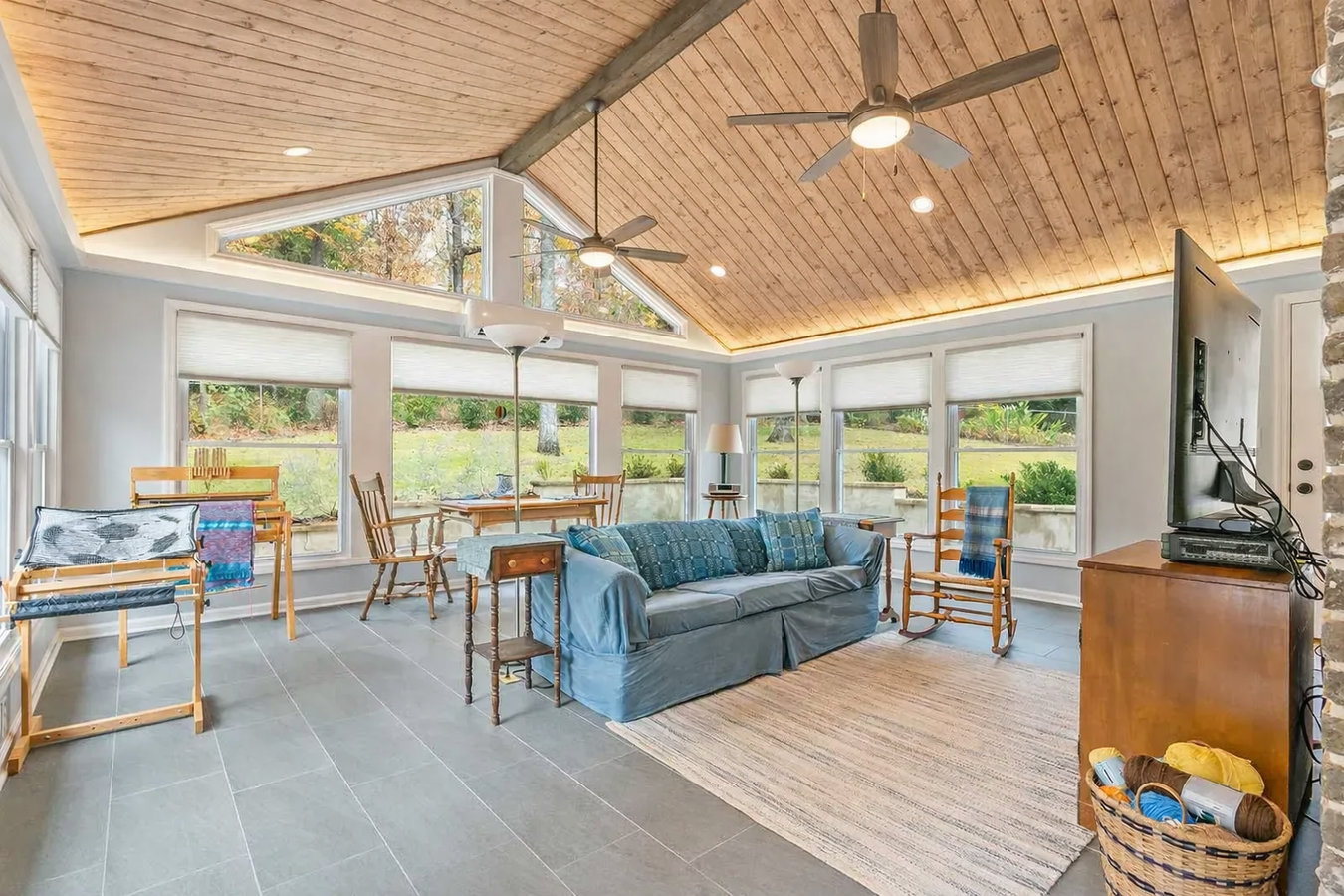
Custom Fullerton Sunrooms builds sunroom additions, patio enclosures, and screen rooms for homeowners across Anaheim, from the flat neighborhoods in the west to the hillside properties in Anaheim Hills. Fully permitted, free estimates within one business day.
Most Anaheim homes were built between the 1950s and 1980s, and many have concrete slabs or covered patios out back that have never been enclosed. A sunroom addition turns that unused slab into a real room. We plan every Anaheim addition with the city's intense summer heat in mind, using glass that keeps the space livable from morning through evening.
Anaheim summers push into the 90s and sometimes above 100 degrees, and winter nights can feel cool even if they rarely freeze. A four season sunroom with full insulation and a wall-mounted mini-split gives you a space you can use comfortably no matter what month it is, without the temperature swings that make an uninsulated room hard to plan around.
Tract homes across central and west Anaheim typically have a concrete slab patio that bakes in the afternoon sun and offers no protection from Santa Ana winds or the occasional winter rain. Enclosing that patio gives Anaheim homeowners a protected room without starting from scratch, and the existing slab is often a perfectly good foundation to build from.
Anaheim evenings from late spring through fall are warm and pleasant, but insects make sitting outside less enjoyable. A screen room lets you take advantage of Anaheim's comfortable evening temperatures without the bugs, and it costs less than a fully enclosed room while still giving you a real outdoor living space.
Anaheim's older patio covers made of wood or aluminum are common on homes built in the 1960s and 1970s, and many of them are at the end of their useful life. Converting that structure into a proper enclosed sunroom is often the logical next step. You get a permanent, weather-protected room in place of a cover that needs replacing anyway.
Anaheim covers a wide range of housing types, from flat-lot ranch homes in central and west Anaheim to larger two-story homes on hillside lots in Anaheim Hills. A custom design accounts for the slope of your lot, the roofline of your existing home, and the specific sun angles your property faces, rather than fitting a standard kit that was not built for your situation.
Anaheim is a large city with distinct neighborhoods that behave very differently. Flat-lot tract homes in central and west Anaheim sit on concrete slabs over soils that include clay layers that swell when wet and shrink when dry. That seasonal movement is one of the most common reasons sunrooms built without proper foundations develop cracked walls and failing seals within a few years. In Anaheim Hills to the east, the challenge shifts to sloped lots with retaining walls and drainage grades that add complexity most flat-lot contractors are not set up for. Knowing which part of Anaheim you are working in shapes how the foundation is designed before a single stud goes up.
Anaheim's climate creates its own requirements. Summers are long, hot, and intense - temperatures above 90 degrees are common from May through September. Santa Ana wind events in fall can gust over 50 mph, testing every connection on a patio enclosure or screen room. Winter rains, while short in duration, arrive in heavy bursts that find every weak spot in a roof or drainage system fast. A sunroom contractor working in Anaheim needs to design for all of it: heat gain management, wind resistance, and water shedding, not just the look of the finished room.
Our crew works throughout Anaheim regularly, and we understand the local conditions that affect sunroom contractor work here. We pull permits from the City of Anaheim Building Division and are familiar with the plan check process and what the city's inspectors expect at each stage. We have worked on the older ranch-style stucco homes that dominate central and west Anaheim as well as the larger two-story properties in Anaheim Hills, where sloped lots and retaining walls are part of nearly every job.
Anaheim covers about 50 square miles with landmarks that most homeowners navigate around every day. Angel Stadium sits near the center of the city off the 57 freeway, and the neighborhoods around it are full of older homes that are good candidates for sunroom projects. Disneyland and the resort district define the western edge of the city and sit just outside the residential zones we work in most often. We are also regularly called into neighboring Orange to the south, and we bring the same level of local knowledge to those projects.
Tell us what you are hoping to build, the general size, and how you plan to use the room. We will ask about your lot, your existing slab or patio structure, and any HOA before we schedule a site visit so we arrive prepared.
We measure the space, assess sun orientation on your specific lot, check your slab or foundation, and look at your electrical panel. You get a detailed written estimate. Anaheim Hills properties also get a grading and slope review at this stage, since sloped lots add variables that flat-lot estimates do not cover.
We submit plans to the City of Anaheim Building Division and manage the plan check process. If your neighborhood has an HOA with an architectural review requirement, we handle that first. Permit review typically takes several weeks, and we update you throughout so there are no gaps in communication.
Once the permit is issued, construction runs two to six weeks depending on scope. City inspectors visit at required checkpoints. When the room is done, we walk you through it and hand you copies of the final inspection sign-off. Keep that documentation for when you sell.
We serve all of Anaheim, CA, from central neighborhoods to Anaheim Hills. Free estimates within one business day. No pressure, no commitment.
(657) 354-1477Anaheim is one of the largest cities in Orange County, with about 350,000 residents spread across roughly 50 square miles. The city is divided into distinct zones by both geography and development era. Western Anaheim, adjacent to Disneyland and the Resort District, is a mix of commercial and residential properties. Central Anaheim contains the bulk of the city's postwar ranch and tract homes, most built between the 1940s and 1970s - a housing stock that is 50 to 80 years old and overdue for updates on many properties. The Platinum Triangle near Angel Stadium has seen new residential development in recent years, bringing condos and townhomes to a corridor that was once purely commercial.
Anaheim Hills is the hilly eastern section of the city, developed primarily from the 1970s through the 1990s. Homes here tend to be larger and sit on sloped lots with views of the surrounding hills. The area has its own distinct character and building challenges compared to the flat neighborhoods to the west. Neighboring Orange borders Anaheim to the south, and we serve homeowners in both cities. According to the U.S. Census Bureau, median home values in Anaheim are around $700,000, making it a market where homeowners have real equity to protect and a strong reason to invest in quality work.
Keep bugs out while enjoying fresh air with a screened outdoor room.
Learn MoreConvert your existing patio into a fully enclosed sunroom space.
Learn MoreTurn your underused deck into a comfortable, weather-protected sunroom.
Learn MoreProtect your patio from the elements with a durable cover structure.
Learn MoreCall or submit a form and we will respond within one business day. Whether your home is in central Anaheim or up in Anaheim Hills, we know the local conditions and come prepared.