
Loading...
Serving Fullerton, CA and surrounding areas. (657) 354-1477
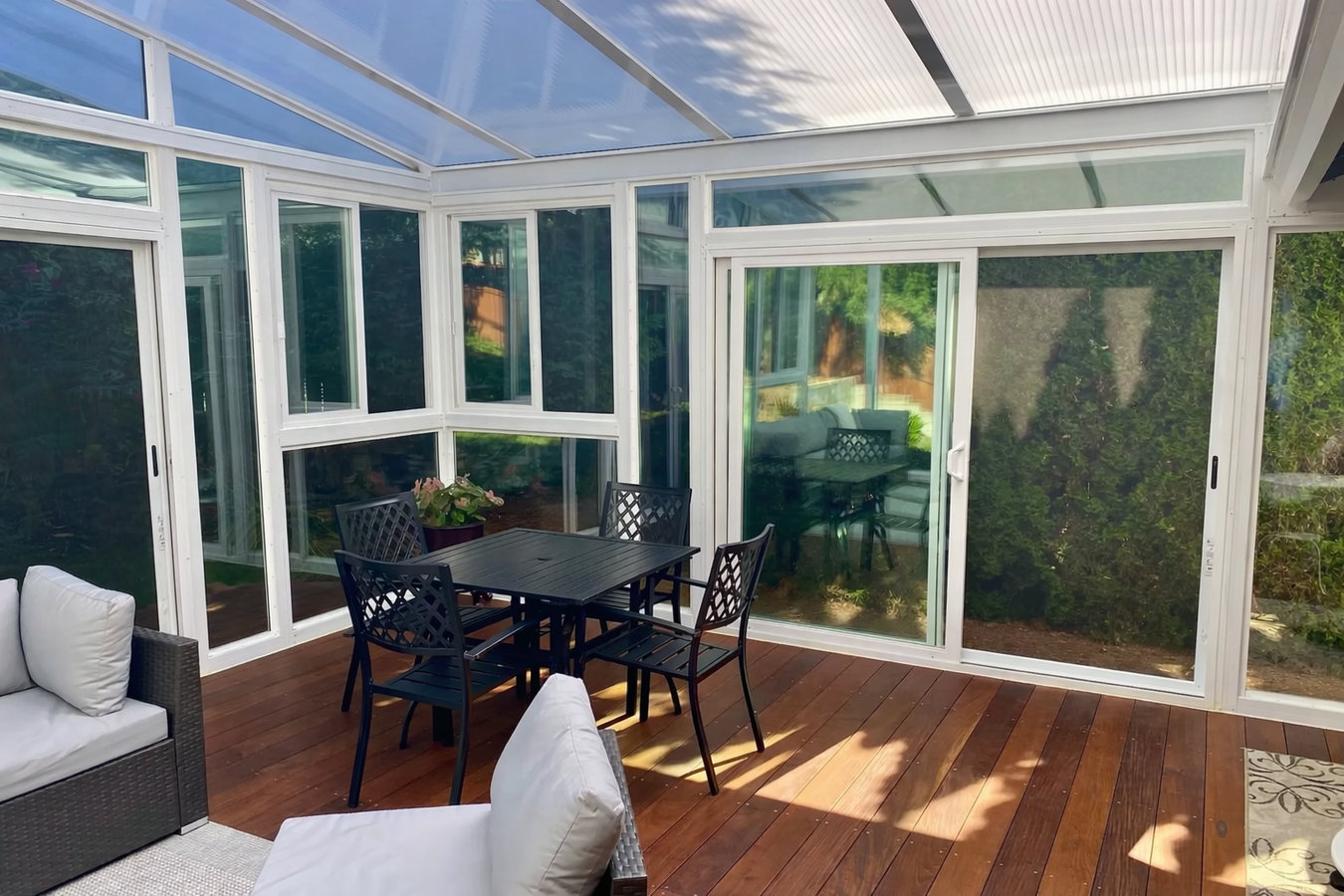
Custom Fullerton Sunrooms builds permitted patio enclosures, sunroom additions, and all season rooms for La Habra homeowners - from the flat-lot ranch streets near the Children's Museum to the sloped properties up near the Puente Hills. Free estimates with replies within one business day.
La Habra's postwar ranch homes almost universally have concrete patio slabs in the backyard - many of them poured in the 1950s and 1960s and still structurally sound enough to build on. A patio enclosure converts that existing slab into a year-round room without the cost of a new foundation. We inspect the slab condition first - cracks, drainage slope, and settling are all assessed before materials are ordered - so there are no surprises once the project is underway.
La Habra's single-story ranch homes were built for a simpler era, and many have modest square footage by today's standards. A sunroom addition attached to the main living area adds usable indoor space that brings in natural light year-round, taking advantage of La Habra's sunny climate. For homes where the existing interior footprint is limiting, a sunroom addition is often more practical than a conventional room addition because the structural requirements are less complex and the project timeline is shorter.
La Habra summers push into the mid-90s regularly, and a room without proper insulation and active cooling becomes unusable by June. An all season room with insulated glass and a ductless mini-split system stays comfortable from January through August, giving you a functional space regardless of what the thermometer reads. Homes near the Puente Hills in northern La Habra can get especially warm on summer afternoons because of the inland heat - a well-insulated all season room handles that load better than a basic screen enclosure ever could.
Many La Habra homeowners want shade over an existing patio without committing to a full enclosure - a covered patio is the logical first step. La Habra's abundant sun makes a quality patio cover a practical daily upgrade, reducing glare and heat load on the back of the house. Patio covers installed today can also be designed to support a future enclosure if you decide to close in the space later, making it a sensible two-phase approach on a budget.
La Habra's hillside properties have irregular lot shapes and varying setback situations that standard kit sunrooms are not designed for. A custom sunroom is drawn to your specific roofline, lot grade, and setback requirements rather than forcing a generic design onto a property it was never meant to fit. For homes on the northern streets near the Puente Hills where terrain varies significantly from lot to lot, a custom approach is often the only practical option.
La Habra's proximity to the Puente Hills and its mature tree-lined streets mean insects and flying debris are a real consideration for open patios. A screen room keeps the outdoor feel while blocking pests, falling leaves, and wind-driven debris from Santa Ana events. For homeowners who want a lower-cost entry point than a full glass enclosure, a screen room is a practical starting point that can be upgraded to full glass panels later.
La Habra's housing stock is dominated by postwar ranch homes built between the 1940s and 1970s. These single-story homes typically have low-pitched roofs, attached garages, and concrete backyard patios - and most of that concrete is now 50 to 70 years old. The clay soils common throughout the La Habra basin expand during wet winters and contract during the long dry season, which puts repeated stress on slabs and foundations over decades. Before any enclosure project begins, a proper slab assessment is essential - what looks like a minor crack on the surface can be the visible edge of a drainage or settlement issue beneath. Root intrusion from the mature trees planted alongside 1950s and 1960s homes is also a common cause of lifted and cracked flatwork throughout the city's older neighborhoods.
La Habra's climate adds its own demands. The city sits inland enough to miss most of the coastal marine layer, so summer heat is more intense than in beach-adjacent cities. Santa Ana wind events in fall and winter regularly push gusts above 50 mph through the La Habra Pass area, which means any structure attached to your home needs to be anchored and framed to handle real wind load - not just the minimum required by code in a calmer location. Winter rain arrives in concentrated bursts between December and March, and La Habra's hillside properties in the northern part of the city near the Puente Hills face additional drainage and erosion risk during heavy rain years. A contractor who has worked on both flat-lot ranch homes and sloped hillside properties in La Habra understands how differently these two site types need to be approached.
Our crew works throughout La Habra regularly, and we understand the local conditions that affect sunroom contractor work here. We pull permits through the City of La Habra Building and Safety Division and are familiar with the permit process for residential additions in this municipality. La Habra sits right on the Los Angeles-Orange County line, and we work on homes throughout the city - from the flat streets on the south side near the Fullerton border to the hillside neighborhoods that climb toward the Puente Hills in the north. That mix of flat and sloped properties means our crews encounter a wide range of foundation and slab conditions on a regular basis, not as occasional exceptions.
La Habra residents know the city well through landmarks like the Children's Museum at La Habra - housed in a historic 1923 Union Pacific train depot - and the hillside streets above town near Westridge Golf Club. Imperial Highway cuts east-west through the city and is the main commercial corridor. Most of the residential neighborhoods branch off Lambert Road and La Habra Boulevard to the south and north. The city has been fully built out for decades, which means nearly all contractor work here is on existing homes, not new construction.
We also serve neighboring Whittier, which borders La Habra to the northwest and shares a similar mix of mid-century housing stock and hillside terrain. If you are in La Habra or anywhere on that western edge of Orange County, we cover the area.
Reach us by phone or through the estimate form on the contact page. We reply within one business day to schedule a site visit at a time that works for your schedule - evenings and weekends are available.
We visit your La Habra property to measure the space, assess your existing slab or foundation, check the attachment wall, and note any drainage or slope considerations. The written estimate you receive covers all work, materials, and permit fees - no allowance items or vague line entries.
We submit plans to the City of La Habra Building and Safety Division and handle all communication with the permit office. Once permits are approved - typically one to three weeks for a standard residential addition - we schedule your construction start date and give you a timeline for each phase.
Work is completed with required city inspections at each stage. When construction is finished, we walk the project with you, confirm the city's final inspection is passed, and make sure any punch-list items are resolved before we close out the job.
We serve La Habra homeowners on flat lots and hillside properties alike. No pressure, no obligation - just a straight answer on what your project will take.
(657) 354-1477La Habra is a city of about 62,000 people in the northwestern corner of Orange County, right on the Los Angeles-Orange County line. The city was originally a citrus-growing community - the annual La Habra Citrus Fair still celebrates that history - but residential development transformed the landscape through the postwar decades. The result is a city of predominantly single-story ranch homes, most built between 1945 and 1975, on tree-lined streets with mature landscaping. The southern half of the city is relatively flat, while the northern neighborhoods climb toward the Puente Hills, creating a mix of flat-lot and hillside properties. About 55 percent of residents own their homes, and the city has been fully built out for decades, so nearly all construction activity is renovation and improvement work on existing housing.
La Habra's central business corridor runs along Imperial Highway, with residential neighborhoods spreading north and south from there. The Children's Museum at La Habra, housed in a historic 1923 Union Pacific train depot on Euclid Street, is one of the most recognized landmarks in the city and a well-known gathering place for local families. The hillside streets above the main grid near Westridge Golf Club are among the most sought-after addresses in town. La Habra neighbors Brea to the east and Fullerton to the south, and we serve homeowners across all three cities.
Keep bugs out while enjoying fresh air with a screened outdoor room.
Learn MoreConvert your existing patio into a fully enclosed sunroom space.
Learn MoreTurn your underused deck into a comfortable, weather-protected sunroom.
Learn MoreProtect your patio from the elements with a durable cover structure.
Learn MoreLa Habra homeowners get free on-site estimates and full permit handling. Call today or submit a request online - we respond within one business day.